Tuesday, July 29, 2008

The Stuff After Genes


Have a look at a very nicely done article on epigenetics in a thoughtful new magazine called Miller-McCune.

This is one of the better pieces you'll see on the complex interplay between environmental factors and genes. It turns out that you are what you eat. But you're also what your grandma ate. Scary to think about.

Duke's own Randy Jirtle is mentioned, as no article on the field would be complete without him. Dean Bill Chameides has blogged on Jirtle as well.

Monday, July 21, 2008

A Thaw in Relations


Those of us in the business of telling the wider world what's going on in the labs and ivory towers have sort of sensed this trend, but now there's proof, in the form of a July 11 Science magazine report from France, Germany, Japan, England and University of Wisconsin researchers who surveyed more than 1,300 scientists in five countries.

Get this: A growing number of working scientists have tried talking to "the media" and more than half have found that hey, it's not so bad! In fact, it might have helped their careers!

(graphic, lifted from Science, Vol. 321. no. 5886, pp. 204 - 205: Was media contact good or bad for your career?)

"Scientists actually see rewards in this process, not just pitfalls," says Sharon Dunwoody, a University of Wisconsin-Madison professor of journalism and a co-author of the new report in a U-W press release.

Unfortunately, there are a lot of scientists living off taxpayer money -- far too many -- who still won't deign to talk to the press or public, but things are changing. Sure, that money should come with some moral obligation to share with the public, but it's also just a smart thing to do: an informed public (or legislative body) can only help when it comes time to take a hard look at research budgets. Papers that receive popular press are also more likely to be cited in professional papers. And tomorrow's super-talented grad students don't start out reading professional journals, they start out watching TV or surfing the web.

Like anything else important and worthwhile, talking with the media requires a little bit of thought and maybe even some training (freely available from your university news office), but it's time well spent. ...And did I mention it's good for a scientist's career?

Thank you Sharon and colleagues, for putting some numbers on the anecdotal evidence.

Thursday, July 17, 2008

Sifting the Shifting Sands


Remember all the hullabaloo when the Human Genome was first completed in 2000? It wasn't the first genome by any stretch, and it certainly won't be the last. Science marches on!

Today, there are more than a thousand completed genomes on record -- from the classic models, nematode C. elegans, fruitfly D. melanogaster and mouse M. musculus -- plus a rogue's gallery of human pathogens, the sea urchin, rice and corn, a bunch of our fellow primates and on and on and on. New ones tumble in every week. It doesn't even make news anymore!

Virtually all of this data is publicly available to any researcher who needs to make a comparison, but we're talking about billions and billions and even a couple of trillions of bits of data.

There's a lot of great science waiting to happen in all this data because time and again researchers find recurring motifs in the genes of wildly divergent species, and in those motifs, clues about what genetic features matter most and what have been changed by evolution. But Where to begin? What tools to use? What does it all mean?!

Duke's Simon Gregory, an assistant professor in medical genetics, is one of the folks who added the mouse genome to the collection, and he also knows a few things about how to sift through this huge sandpile of data to find meaning.

So for the fifth year running, he and a few colleagues are putting on a workshop to help scientists tap into this immeasurably rich source of knowledge. The conference is a three-day geek-out they call the Duke Bioinformatics Workshop, or DBW, and it runs August 18-20.

Participants who think they can hang with it, and might benefit are encouraged to attend. Details here.

Wednesday, July 9, 2008

Learn by Doing


Every summer for the last 20 years or so, Duke's life science researchers have hosted a couple dozen super-talented rising sophomores in their labs for eight weeks of hands-on experience in the laboratory -- their first taste of it, in many cases.

The program is sponsored by the Howard Hughes Medical Institute and directed by Mary Nijhout, a biologist who heads Duke's very successful Undergraduate Research Support Office.

Last summer, we tried a little experiment on the HHMI summer fellows -- we asked them to keep blogs about their experience. What tumbled out was a fascinating look at the world of science through fresh eyes, with all the triumphs and disappointments, boredom and elation laid bare.

So this year, they're at it again, and the results, once again, are just terrific.

For example, Stephanie Haeyun Chang has learned a little about how labs share biological specimens freely and cooperatively across the country and even around the world -- but you have to check what you get carefully to make sure it's what the paper said it was!

Kristina Warren has compiled a short list of lab dos and don'ts. Like, DON'T leave precious enzymes out in a tub of ice overnight -- by morning they're junk in a water bath. DO keep track of the names and concentrations used in your recipe, and so on. She doesn't elaborate on how exactly she's accumulated all this practical wisdom, but you get a sense it won't happen again.

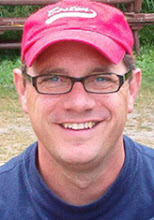
And Nathan Ranney, pictured mugging above, is getting some fresh air (read oppressive heat and humidity, ticks and mosquito bites) taking gas samples in the Duke Forest for his PI Rob Jackson. He's learned that a balky machine can cost you a whole day of work.