Showing posts with label addiction. Show all posts

Monday, January 12, 2009

Student's research provides insights into alcohol addiction


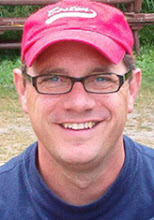
Kapil Ramachandran, 17, is a freshman at Duke who's scientific career has already won him national acclaim.

At age 16, his research about alcohol addiction won him a prestigious award at the Intel International Science and Engineering Fair. According to Kapil, his innovative research was inspired by his experiences while working in the emergency room of a hospital.

"I saw a patient come in who had overdosed on alcohol and narcotics. I thought, 'Why would anyone do that to themselves? How could they become so addicted to something that they're willing to risk their life for it?' That's what switched me on."

Kapil looked for labs in his hometown, Austin, Texas, that were conducting research about addiction. He found a lab that was integrating behavior and molecular biology, and began his research.

"I had to figure out a suitable model organism to work with. I picked fruit flies because they are very easily manipulable in terms of genetics. It's easy to create them; they have a limited number of chromosomes and reproduce quickly."

"First, I had to survey genes that could have been implicated in addiction. The search was actually a random systematic search. I picked a chromosome and I started deleting chunks of it. I took an entire chromosome and every 12 genes I would excise out 12 genes."

This search yielded 600 to 700 lines of flies. During the excision process, Kapil also developed a behavioral test to measure their tolerance of alcohol. When he ran all the lines of flies through the test, he found that only one or two groups did not show tolerance. He examined these groups to see what genes they had in common. From there, he narrowed in on the family of genes, and then to specific genes and proteins.

Although Kapil conducted his experiment on fruit flies, it has many implications for the future treatment of alcohol addiction in humans.

"The project was fully independent. My professor and my coworkers taught me the techniques, but other than that, the research, the ideas were mine."

"[My parents] put up with me not being home until 3 a.m. I was at the lab 11 hours a day ... I worked my ass off."

Kapil was awarded the prize in May 2008, the day before his birthday. In addition to recognition for his efforts, he received $15,000.

"That was some nice cash in the bag the day before my birthday," Kapil said. What is he using the money for? "I'm coming here," he laughs. (Photo: Kapil with Elias Zerhouni, director of the National Institutes of Health.)

"It's awesome. Without a doubt. I love this place. Basketball is #1- there's no atmosphere like Cameron. And the people I've met here. There's such a wide variety of people, it's incredible. And they're so freaking smart."

It's an impressive compliment, coming from one as successful as himself.

Tuesday night, Kapil will be talking about his work at Periodic Tables Durham's entry into the science cafe movement -- a social event for science-minded adults that provides information and discussion about the latest scientific research.

Monday, September 8, 2008

Eat your eggs and get some sleep

Duke neuroscientist Wilkie "Bill" Wilson has given US News & World Report blogger Nancy Shute a quick tutorial on how teenage brains can learn better. It's familiar, common-sense advice, (sleep well, eat right, exercise, feed your brain steadily, not in binges, etc.) but it's all backed by science. You may notice that slumping on the couch in front of the TV is NOT on the list.

Next year, the result of all this thinking about brains rolls out as DukeLEARN, a new health curriculum for ninth graders being piloted in the some NC schools. Wilson, a research scientist in Pharmacology and Cancer Biology, has been working for a decade on educating teens about the perils of drug use, especially as it concerns their tender young minds, and has published three books: "Buzzed: The straight facts about the most used and abused drugs from alcohol to ecstasy," "Pumped: Straight facts about drugs, supplements, and training," and "Just Say Know: Talking with kids about drugs and alcohol," all with W. W. Norton.

In developing the books and doing speaking engagements around the country, his team came to realize that they could build a whole curriculum around the care and feeding of your brain.

"We spend all this time teaching to their brains, but never teach them how to care for and use this tool!" he said.

Wilson's preliminary work on DukeLEARN has been supported by a seed grant from Duke's Center for Child and Family Policy, but he's seeking more funding to expand the program.

Friday, September 5, 2008

Neurobiology of Addiction

From Monte Basgall:

The same biological system that makes the body give in to drugs is tied to a sense of bodily well being, Duke pharmacology professor Cynthia Kuhn said in a Sept 4 lunchtime talk on "the neurobiology of addiction." That means "addiction is at its core a biological phenomenon" and "dopamine gets things started," she told a group in the Sanford Institute's Rhodes Conference Room.

Dopamine is the neurotransmitter that nerve cells release to "make us like things that are life sustaining," according to Kuhn. That chemical spreads the good word to other responsive nerve cells by activating their own dopamine receptors. But drugs like cocaine, marijuana, alcohol and heroin can hihjack the process by activating those same dopamine receptors. Biologically drug-prone individuals then become adapted to that external stimulation and digress from being "dependent" -- meaning their tissues only function normally in the drug's presence -- to becoming addicted.

With addiction's onset, those compulsive drug cravings grow so powerful that users are willing to endure increasingly negative consequences to acquire the increasing amounts needed to retain any sense of pleasure. "Animals and people will self administer drugs until they die," Kuhn said. "They will skip work and not take care of their children." The prefrontal cortex, a dopamine-targeted brain area involved in prioritizing behavior, begins sending out drug-seeking orders. Tests show lab animals on drugs begin acting impulsively, for example by pulling the "reward" handle before the light they are trained to respond to comes on.

And what about genetics? While Kuhn said there is not a single, overarching "addiction gene," researchers have identified a number of candidate genes involved in the drug addiction process.

Fortunately, addiction-prone individuals are in the minority. Only about 20 percent of animals tested display addictive behavior, and those also tend to be the most impulsive, Kuhn said. Other studies have found that addicts have fewer than normal dopamine receptors. In fact, the dopamine system itself is one or several potential targets for drug treatment. Animals whose dopamine responding nerve cells have been destroyed or disabled, for example, avoid taking drugs.