Showing posts with label field research. Show all posts

Sunday, April 4, 2010

Hide and Seek in the Open Sea

Duke biologist Sonke Johnson has made many trips underwater to study aquatic organisms. The direct observations enable his research, but he laments that any observation - whether via submersible, diving, or otherwise - causes some disturbance that impedes observation of normal behavior. At worst, with a schoolbus-sized submersible, “you film responses of stark terror,” Johnsen said.

Johnsen’s lecture, April 2, was given in memoriam of Dr. Knut Schmidt-Nielsen, the pioneering physiologist who discovered, among other things, the function of a camel’s hump for storing water and energy. (You may have seen the statue of him with a camel near Bio Sci.)

Johnsen equated trawling, another research method, to “flying over London with a grappling hook and trying to determine the behavior of a London gentleman from what you catch. You can get some information from this, but it’s very limited.”

Blue water diving, sans submersible, is less disruptive, but “you’re left studying the slow and the dumb.”

Johnsen has also spent time researching the ecological pressures (namely predators) that cause ocean organisms to look one way or another. These organisms live in an environment where there is nowhere to hide, and where successful camouflage ensures survival.

“Predation in the open ocean is, even by predation standards, pretty brutal,” Johnsen said.

Johnsen described four modes of camouflage used by ocean organisms:
  1. transparency

  2. cryptic coloration

  3. mirroring

  4. counterillumination (“hiding yourself with lights”)

Transparency
Transparency is a very common adaptation in the ocean, Johnsen said, but there are strings attached. “The fundamental trick these animals have to solve is how not to scatter light.” Transparent organisms must be extremely flat, because if their bodies give light a chance to scatter (even at a cellular level), they will appear opaque-- and thus vulnerable to predators.

Unfortunately, a flat body is not the only problem transparent animals have to solve. In order for eyes to work, they must have pigment to absorb light. Thus, they must be visible-- unless the organism can find another solution. Some organisms spread out the eye to present less of a target to predators and others compact their retinas (at a great cost to function).

Transparent stomachs also can be troublesome, Johnsen said. Even transparent animals will become opaque when chewed, and perhaps colorful. “You’ll need an opaque gut, otherwise you’ll light up like a Christmas tree when you’re digesting your food.” Some organisms address this problem by making their gut as small as possible, or by resorting to a liquid diet.

Cryptic Coloration
According to Johnsen, “something that is ridiculously colorful on land could actually be ridiculously cryptic underwater.” Organisms’ coloring also depends greatly on where they live in the water column. “As you go deeper, some of the blue light is actually converted into red light,” due to Raman scattering. For that reason, many abyssal creatures are either transparent, red, or both.

Mirroring
“The oceanic light field is fairly symmetrical. Turn around, and you’ll see the same amount of light.” Mirroring takes advantage of this, and works by effectively showing a representation of what should be at a particular spot (if the organism were not). “It’s not lost on nature that this works really well.”

Johnsen tried to evaluate whether mirroring or coloration was a better protection from predators, depending on the effectiveness of each in different environments (coastal vs. oceanic water, noon vs. sunset, different depths). He found that in general, mirroring was more successful because it was more robust, but that coloring was fine if the organism tended to stay in the same spot.

Counterillumination
Some deep-sea organisms hide themselves from predators below with bioluminescence (creating their own light). These organisms can replicate light that is the same intensity of daylight, and thus trick predators into thinking they aren’t there.

Thursday, January 7, 2010

Blogging from Antarctica (we wish!)

What if you lost the roof over your head? It'd probably be a pretty significant change in your lifestyle.

If you were an organism living on the bottom of the sea under the massive Larsen Ice Shelf of Antarctica, this would be more than a rhetorical question.

Duke Graduate Student David Honig is on a ship just off the ice shelf right now with a team that is exploring those questions.

All sorts of critters have lived in the lightless environment below the shelf for millennia, if not eons, making their living on energy sources other than sunlight, namely methane that seeps from the ocean floor. But the Larsen shelf is breaking apart and calving like crazy, exposing huge new areas of this delicate ecosystem to sunlight for the first time in a very long time.

What happens next?

Tune in to the Deep Sea News blog and follow along with David for the next two months as the team tries to find out.

Monday, November 16, 2009

Inferring Ancient Fires in Southeastern Appalachians


A U.S. Forest Service-funded research project that took advantage of a modern-day controlled burn provides a glimpse at how Native Americans might have used flame to manage forests of the Appalachian mountains before European settlers re-rearranged the landscape.

At a Nov. 13 University Program in Ecology seminar at Duke, Norm Christensen, former Dean of the Nicholas School of the Environment, described how he and former masters degree student Kurt Fesenmeyer used charcoal from that burn as a reference layer to look for more ancient signs of fire.

They did so by probing underlying soil layers of the 3,000 foot-high section of Western North Carolina's Nantahala National Forest. They then estimated the ages of tiny flecks of older charcoal they found there with an expensive carbon dating method called accelerator mass spectrometry.

Before expending their $70,000 research budget, the researchers "found fire everywhere," Christensen said. There was evidence for blazes as far back as 8,550 B.C., though most dates fell between 1,200 and 400 years ago.

Fires appeared to be of lower intensity during a period roughly coinciding with the Woodland Culture which ended about 800 A.D. Those Native Americans kept their own populations relatively low while carefully managing the landscape for game, he said. Fire intensities increased after that, coinciding with the Mississippian Culture -- an era of mound-building and higher populations that ended around 1500.

Christensen, who is a fire expert, said European settlers who moved in noticed that Appalachian woodlands seemed especially open and grassy then, a contrast to today's denser conditions. Many of the pines thought to have once dominated higher elevations have also been replaced by broad-leaved species like oaks and chestnut with rhododendron growing underneath.

All of that could be signs that former fire management that has been supplanted by modern day fire control. In fact, today's Southeastern forests "are generally moist" and "not particularly flammable," he said.

Friday, November 13, 2009

Duke Forest, by the numbers

Most laboratories at Duke are described in terms of square feet. But the Duke Forest, which performs about $3 million worth of research every year, is best appreciated in square miles -- more than 11 of them -- scattered across three counties.

(image: Professor James Clark works on his soil warming experiment| Megan Morr, Duke Photo)

Resource manager Judd Edeburn brought the forest's friends and neighbors up to date with activities in the forest during an informal annual meeting Thursday night at the New Hope Improvement Association Center, adjacent to the heavily-used Korstian Division. (Duke Forest Map, PDF) About 60 grad students, staff and trekkers noshed while Judd described the latest victories and challenges.

Victories: Education and research. More than 2,000 students from across North Carolina use the forest each year for research projects and field trips. Current research includes, of course forestry and wildlife management, but also climate change and nanotechnology.

About 1 million board feet is harvested each year to maintain healthy diversity and produce about 85 percent of the forest's operating budget. "Most of the forest, because of its past use as agricultural land, the dominant component is pine timber," Edeburn said. About half of the forest is off limits to logging as well, so-called "heritage sites," like that around the scenic New Hope Creek. The forest could sustain an annual harvest of 2.5 to 3 million board feet, but never has. Timber prices are low right now anyway, he said.

Challenges: Kudzu vine has been spotted, which is probably manageable, but a mini-bamboo grass called microstegium is running rampant. Some giant herbivores called white-tailed deer are rampant too, occurring at a density of 60 animals per square mile -- up to 80 in some spots -- when wildlife biologists recommend more like 15-20/mile to keep everything in balance.

The forest has started allowing hunters to take some deer, under carefully controlled conditions, and experiments are being run to fence off some areas to see just how much difference deer make, but fencing the entire collection of woods would be ridiculously difficult and expensive, Edeburn said.

There was some outcry when the deer hunt was introduced last year, but Duke Forest staff kept careful track of every comment they received and found that the largest response by far was "where can I hunt?"

Monday, October 26, 2009

Digitizing the Art of Wildlife Tracking

A pair of British researchers, veterinarian Zoe Jewell and biologist Sky Alibhai, are out to save some of the planet's most well-known species, using both local knowledge and state-of-the-art computer science to identify individual animals by their dusty footprints.

(image: a 25-centimeter black rhino footprint, courtesy of WildTrack)

Describing their efforts at Duke's weekly Visualization Friday Forum, the founders of the WildTrack project said that monitoring black rhinoceroses movements in Zimbabwe during their 1992-2000 field work first convinced them that conventional "invasive" methods of following wild animals with radio collars can be counterproductive.

For one thing, such collars are not designed for rhinos' bullet-like heads -- easily slipping off or sometimes causing deep neck wounds if they don't. Tests showed collar failure rates of almost 90 percent after two years of use. And the routine animal immobilizations required to fit and maintain the radio collars caused female fertility rates to significantly decline.

"We began to think 'what can we do?'" Jewell said. "The answer was right in front of us."

Indigenous trackers -- from western Africa to the Arctic -- have uncanny abilities to "read" footprints, identifying not only species apart but even telling individual animals apart. So the scientists asked the trackers how they do it. Then they learned to distill the trackers' art into a form that scientists can share.

(image: A black rhino footprint with distinctive landmarks indicated. Courtesy of WildTrack)

That has led to their Footprint Identification Technique" (FIT), a way of using statistics and computer algorithms that can identity individual animals, their species and in some cases their genders with accuracies of up to 90 percent. The researchers are in the Triangle now working with SAS Institute, the Cary N.C. software firm, to develop ways to improve their techniques with SAS's JMP visualization software.

FIT has already been successfully adapted for not only black and white rhinos but also on other iconic species such as Bengal tigers, African lions and polar bears, Jewell and Alibhai said.

Monday, October 12, 2009

Pajama-Wearing Power Users

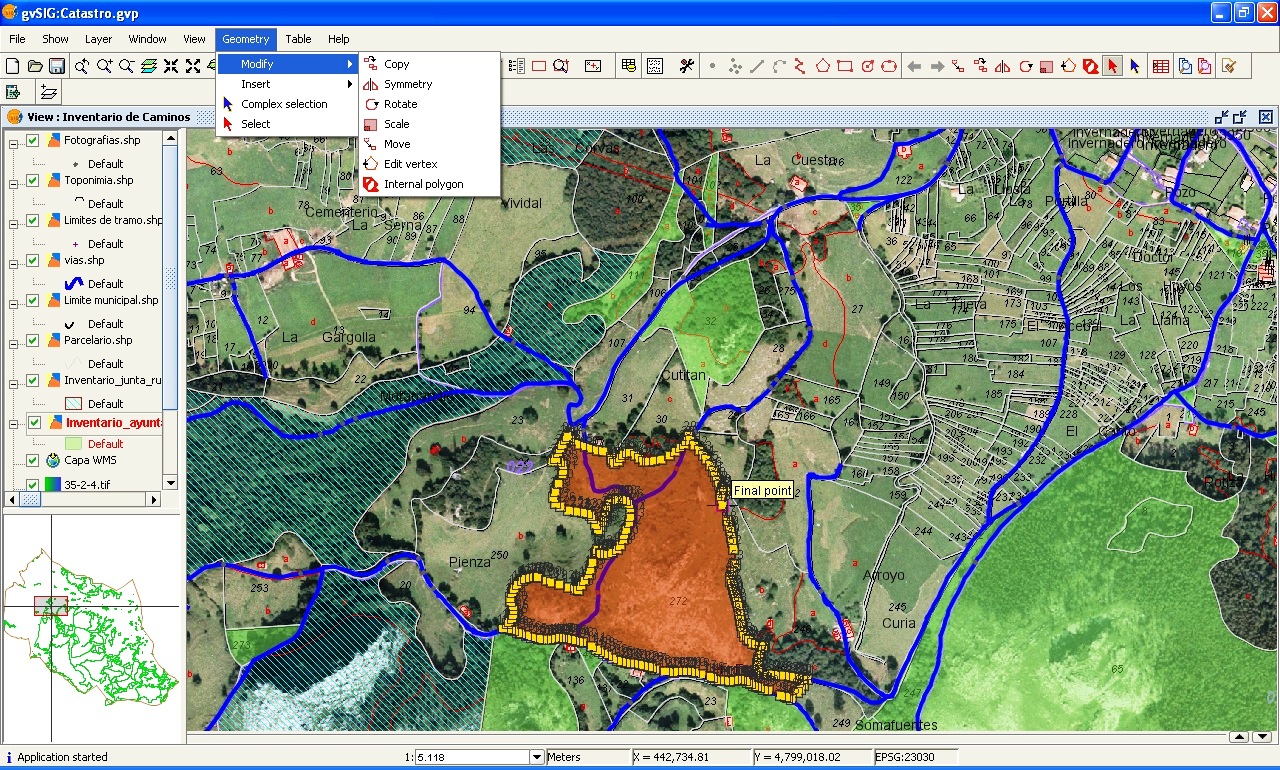
As a crucial part of their training, graduate professional students in the Nicholas School for the Environment need to have some experience with giant, expensive software packages like those used for statistical analysis, data modeling and GIS mapping.

It's more than a four-year-old laptop can handle, let's put it that way. But while the school's computer labs have managed to stay state-of-the-art, the school's enrollment growth has suddenly outpaced them.

"Too many students, not enough computers," said Susan Gerbeth-Jones, Nicholas’ assistant dean for information technology.

GIS image by Emilio Gómez Fernández, Wikimedia Commons

With partners in Duke's Office of Information Technology (OIT), Nicholas is piloting a "Virtual Computer Lab," that gives students anytime, anywhere access to the computing power they need. It even takes reservations -- students log in to say when and how they want to use the system, (for up to four hours at a time) and the appropriate software package is loaded and ready to run when the appointed hour arrives.

"It keeps me from having to fight for computer lab space at school and it's so much nicer to sit on my couch and do GIS than sitting in a lab," one student wrote to Gerbeth-Jones as part of the evaluation of the pilot.

And virtual means students don't have to be in Durham at all. They could also tap in from field research, provided their Internet connection is fat enough.

The system runs on software developed by a virtual computing group at NC State and hardware donated by IBM. It can handle 16 users at once right now, but may grow by 90 more before the semester is over, according to Liz Wendland, a senior IT analyst at OIT.

Wendland and Gerbeth-Jones described the project in a morning session at the annualTech Expo on Monday.

In addition to convenience, the virtual system is tremendously efficient, Gerbeth-Jones said. A traditional computer lab is used perhaps 25 percent of the hours in a week, because of building hours. The virtual lab's usage so far has been around 68 percent.

And when the virtual system is less in demand, some of its computing capacity becomes a part of the campus shared cluster resource. "Surely, it's going to be a saving (of money)," Gerbeth-Jones said, which fits nicely with this year's TechExpo theme: More with Less.

Friday, October 9, 2009

Conservation Research Explores Uncharted Territory

Five to seven hours by bus, and up to three days by canoe. Not your average commute, but that’s how long it took for Duke undergraduate Varsha Vijay to reach the site of her research in the Ecuadorian Amazon, January through August of this year. Vijay would stay with the Waorani people in that region for one to three weeks at a time.

“They’re known as the fiercest tribe of the Amazon. It’s not hard to believe. But to me, they were very welcoming,” Vijay said.

Her research culminated with a co-authored paper released a few weeks ago: Ecuador's Yasuní Biosphere Reserve: a brief modern history and conservation challenges (Finer, Vijay, Ponce, Jenkins, & Kahn, 2009). The paper brings together a wealth of information about biological, social, and political issues pertaining to the area.

Vijay’s route to this village and research subject started with an interest in the relationship between the environment and health. After taking professor Stuart Pimm’s class sophomore year (Preserving the Diversity of Life), she asked him to be her advisor.

“I was pretty certain I wanted to visit these interesting places, but I didn’t know how to get there,” Vijay said.

Pimm put her in touch with then-PhD student Luke Dollar, who was doing research in Madagascar. Vijay conducted biological surveys and learned about people’s perceptions of and connections with the environment.

While she enjoyed the experience, “it sparked a wanderlust in me. I wanted to go somewhere else.”

In the summer of 2008, Vijay ventured to Ecuador with a fellow undergraduate. She discovered something surprising about the scientific process there.

“My impression was that a lot of researchers were going for data collection and disappearing. They never asked the natives. Investigating the native community is a really important part of doing scientific research in highly biodiverse areas -- these areas support very unique communities of people, who themselves display an extraordinary knowledge of the environment around them. To study the environment without involving these people is kind of nonsensical.”

Following that experience, Vijay returned to the states and worked for an organization in Washington, Save America's Forests, where she met paper co-author Matt Finer. Both had a common interest in Ecuador and wanted to know more.

Unfortunately, “there wasn’t any resource we could turn to. We needed more background information just to do our own projects,” Vijay said. “We thought, if that background is lacking, let’s just create it ourselves.”

With support from Pimm’s lab and other Duke funding, Vijay went back to Ecuador. She overcame significant linguistic and cultural barriers and created a second family there.

“At one point, I stopped seeing their actions as strange and it became more mundane. I must have really adjusted,” Vijay said. “Ceremonially, they are nude. They eat monkey, tapir and anaconda. I was raised in a vegetarian home, so I eased myself into it.

“There’s a difference between living in an agrarian, sedentary society and a hunter-gatherer society. They can walk forever. Their knowledge of the jungle and their ease within it still amazes me. There’s one type of knowledge that you can gain in school, and there’s a whole other type that they have. They have an innate knowledge of what’s around that no amount of schooling would allow me to gain.”

Vijay believes her immersive experience gave the data another dimension. “To study conservation, you have to put it in the context of health and well-being. In some senses, it’s super multi-disciplinary, going back to anthropology and backing it up with scientific data.”

One of Vijay’s most important discoveries was how the Waorani’s idea of health encompasses the environment. For them, environmental factors such as scarcity of food and water, bad weather or poor hunting exert a sizable influence on everyday well-being.

Vijay has some advice for the idealistic adventurers of the future. “People who are idealistic have a great chance to impact the world, but you have to strike a balance between dreaming and being practical. Don’t be so set in your idea-- you don’t have enough information to make perfect projects.”

“Let your heartstrings be pulled, but don’t lose your focus. Know the things you are good at and passionate about. Foster that in yourself.”

Monday, November 10, 2008

Shortcomings of Medical Donations


Studies show that 80 percent of the medical equipment reaching developing nations' hospitals is donated but 70 percent of those donations don't work. Such shortcomings could explain why the world's medical communities' failed in their goals to deliver health care everywhere by the 21st century, said Robert Malkin, a Duke professor for the practice of biomedical engineering who also directs a voluntary program called Engineering World Health.

Malkin analyzed why nearly 3,000 pieces of such technology failed to work correctly during a Nov. 7 talk at a Duke conference on Bioengineering Applications to Address Global Health. Some widely-touted reasons, such as a lack of spare parts or an inability to train local staff to use the equipment, appear to actually be off the mark, he said.

One of the biggest real problems is hospitals' inability to replace disposable items connected the technology in places where the per-patient outlays for such "consumables" cannot exceed 34 cents, he said. Spare parts may be less of an issue than access to the right tools, he added. And staffs that might appear confused in training may really need access to manuals in the right language.

Malkin's own Engineering World Health (EWH) project sends volunteer engineers to work alongside hospital administrators to evaluate equipment needs. Those needs are then met with donated equipment.

After that, engineering and science students from Duke and other universities visit those hospitals after undergoing language and technical training in Costa Rica or Tanzania. Once on location, the students work on equipment repair and installation. And the voluntary engineers also make followup visits to make sure everything is working properly.

Between 2003 and 2007 EWH has put 1,623 pieces of equipment --- $3 milllion worth -- into service, Malkin said.

Friday, September 26, 2008

Looking for the Green Piece

Trends in global climate change are painstakingly emerging from a complex puzzle being assembled by diligent scientists all over the world. There are literally countless pieces, and there's no picture on the cover of the box to help them along.

One of the puzzle-makers is Nicholas School forest ecologist Jennifer Swenson who's looking very hard at several square pieces, each 250 meters on a side, that each amount to one pixel on a satellite image of North Carolina. Specifically, Swenson wants to know precisely when and how each pixel switches from brown to green as spring arrives in April or May.

To MODIS, the NASA satellite program that provides these awesome pictures of spring as seen from space, it's just a single point of light, but Swenson knows there's actually a ton of data in that one pixel. The exact arrival of spring, as measured by a full canopy of leaves, is an important variable in the global change equation.

Swenson explained to the Visualization Friday Forum how she's taking ground-truth measurements of soil moisture, temperature, leaf development and other variables to calibrate what MODIS sees with what is really going on.

Eventually, this will add to MODIS's ability to determine whether in fact spring is arriving earlier and earlier, as already evidenced by anecdotal records such as cherry blossom dates in Washington DC and the first arrival of migrating birds, as recorded by amateur record-keepers.

Together, this is known as Phenology, the study of the timing of natural events, and that's our new word for the day.

Tuesday, September 23, 2008

Mouse Lemur Glamour Shot


Not to be missed! Duke grad student Meredith Barrett continues to blog from Madagascar, where connectivity is sparse at best. If you haven't visited with Meredith, please do. The rewards are abundant. She'll be wrapping things up this week, and heading back to Durham with a lot of specimens (blood, poo and hair, that is -- not lemurs) and other data.

Monday, June 16, 2008

Lemur Health & Conservation


I'd like you to meet Meredith Barrett. She's a grad student in Duke's program in ecology with Lemur Center Director Anne Yoder and she's doing some very interesting work on the health of animals that are on the fringes of human encroachment.

You won't be able to meet Meredith in person -- at least not until September -- because she's on the other side of the world right now, doing field work in Madagascar. Her work involves gently trapping and darting lemurs on the forest edge and quickly taking several measures of their health status, including a physical and dental exam, a snip of hair, and yes, fecal material. (They're apparently quite willing to donate that last bit, she says.) Her hypothesis is that animal populations probably suffer from human encroachment even before the humans have actually taken away their habitat. Proving this may help inform policy about how and where to create sanctuaries.

Meredith will be taking us along on her field work and living conditions in this strange and wonderful island through a blog: Lemur Health and Conservation. Connectivity is sure to be a frustration, but as you might have noticed, Meredith is pretty game for tough conditions. She might even be able to post some video. Stay tuned!

Tuesday, April 29, 2008

Sea Cow Roundup


-Posted by Karl Bates

Banana leaves and netting wouldn't be much good in trying to capture a terrestrial cow, but for a rare sea-cow off the coast of the Costa Rican/Panamanian border, it proved to be just the thing.

Duke ecology graduate student Daniel Gonzalez has reported the first capture of a Manatee in southern mesoamerica, a feat that required 20 people and remarkable amounts of patience.

The half-ton Antillean manatees (Trichechus manatus ssp. manatus) proved agile and cunning, contrary to their reputation as plodding and simple-minded.

“These animals were feeding, fully alert, and capable of incredible bursts of strength – a force to be reckoned with,” Gonzalez told a reporter for the Critical Ecosystem Partnership Fund.

After a week of trying, the team -- half in the water half in boats -- finally netted a 2-meter female, tagged her for satellite tracking, and set her loose among the mangroves again. Researchers hope she provides a first glimpse into this little-studied subpopulation of grazing sea mammals.

Wednesday, March 12, 2008

Small Bones, Big Controversy

In two rocky caves on the Micronesian nation of Palau, a team of scientists including Duke paleontologist Steven Churchill has discovered fossil bones from some two dozen tiny humans who inhabited the island between roughly 900 and 2,900 years ago.

Writing in the online journal PloS ONE, the team said the bones were from modern humans (Homo sapiens), with the earliest fossils belonging to individuals who were three to four feet tall and weighed 70 to 90 pounds. Though modern, the individuals to whom the bones once belonged had several traits considered primitive, or archaic, for the human lineage.

(In the top photo, a lower jaw dated at 2,900 years old and one from an average-size modern female show the size difference between the early Palauans and people today. In the bottom photo, a team member explores a cave.)

The team says the findings expand the known range of variation in modern humans in Southeast Asia.

But what has led the New York Times and numerous other popular media outlets to run with the story is that the findings add fuel to debate raging -- at least in paleontological circles -- around the 2003 discovery by other scientists of some older and even smaller human fossil bones than those found on Palau. Check this report from the National Geographic Society, which funded the search in Palau.

At issue is whether the smaller specimens, found on the Indonesian island of Flores and immediately dubbed “hobbits,” represent modern humans reduced in stature by disease, genetics or some other biological process -- or, as their discoverers claim, represent a separate species, termed Homo floresiensis.

Previous Duke-affiliated research and work elsewhere favor the former argument. But backers of Homo floresiensis as its own species are vocally defending their claims.

The Palau findings likely won’t settle this hash. But Churchill (photo), an associate professor of biological anthropology & anatomy, says they add context in which to interpret the hobbit fossils.

His team also told the Times that its fossils support “at least the possibility that the Flores hominids are simply an island-adapted population of Homo sapiens, perhaps with some individuals expressing congenital abnormalities.” Humans and other animals living on isolated islands often are of smaller stature than their mainland cousins -- a phenomenon known as island dwarfism.

Stay tuned to your local paleontologist.