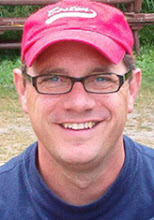
Thomas Kepler, Director of Duke's Laboratory of Computational Immunology, sure doesn't sound like a physicist, but he is, or rather was. At Friday's Visualization Friday Forum, Kepler shared his group's latest work on modeling immune system behavior in a session called "Vaccines (the Movie)."
It's a collaboration within the Human Vaccine Institute that pulls together statistics and math, computer science, and visualization technology with colleagues from Duke, UC Irvine, Emory and the National Institutes for Allergy and Infectious Disease, a part of the NIH.
The immune system might be thought of as an organ, with several types of specialized cells working together -- but it moves. "That's the coolest thing!" Kepler says. Immune cells flow through the body, and aggregate at the scene of trouble as needed, forming "a semi-solid organ."
After walking the group through some immune system 101 (the macrophage's connected to the dendrite; the dendrite's connected to the T cell; the T cell's connected to the B cell…), Kepler narrowed his focus to the flash mob of B cells that gather in the lymph node to educate each other about an invader. The goal is to understand how B cells and T cells get organized into these tight aggregations inside the lymph, called germinal centers, and figure out ways vaccines might optimize their performance.
(SEE MOVIE: from NIAID, showing B Cells (red) moving throughout a lattice of collagen fibers within the lymph tissue.)
Kepler's group is combining the latest cellular imagery with mathematical models of lymph tissue to better understand how these cells become organized to then go out to the site of infection and wage a carefully calibrated battle against the invaders.
The ultimate goal is to develop swift and effective vaccines with minimal side effects.
Science that breaks the pieces down and figures them out individually has brought this far, Kepler says, but now it's time for the modelers and biostatisticians to try to put the pieces back together and figure how they work in a dynamic system. "So far, we still have a long way to go."