Imagine a relatively simple hand-held device that physicians can use to determine whether cancer patients undergoing surgery have any tumor cells left behind that might set off another assault.
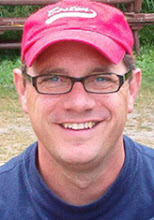
That’s what David Kirsch (photo) of the Duke Comprehensive Cancer Center is trying to develop. With such a device, patients might be spared the radiation therapy now commonly used after surgery “just in case” cancer cells remain. Also, patients found to have residual cancer cells might be given more precisely targeted high-dose radiation.
There are skeptics. But Dr. Kirsch recently received a Damon Runyon-Rachleff Innovation Award that will let him use the latest in molecular imaging technology to turn his idea into medical reality. Given for the first time this year, the awards, which provide $450,000 over three years, are underwritten by veteran Silicon Valley venture capitalist Andrew Rachleff, who says more funders of cancer research should start placing bigger bets on ideas with a high risk of failure but a stunning potential payoff.
The innovation awards are described
here, and Dr. Kirsch outlines his research
here.
Some other private funders of biomedical research also have staked out a high-risk, high-reward route for some of their programs. Among them, the locally based
Burroughs Wellcome Fund and the larger
Howard Hughes Medical Institute have helped lead the way out of the proverbial thought box.
The value of taking the less-traveled path in other areas of science and technology is explored in a recent
New York Times article titled “Innovative Minds Don’t Think Alike.” Its spirit is captured by Intel co-founder Andrew Grove, who famously has said: “When everybody knows that something is so, it means that nobody knows nothin’.”

 Duke mathematician and physicist Arlie Petters was recently recognized by his hometown of Dangriga, Belize with a street named in his honor.