Showing posts with label science blogging. Show all posts

Thursday, March 11, 2010

New Look

We've just redesigned Duke Research and relaunched it on March 11, 2010. It's the same broad coverage of Duke's research enterprise you've come to expect with great photos, videos and slideshows. But now it's built on a Drupal platform that allows us to update the content frequently with minimal hassle. We hope you enjoy it, but if you ever have concerns or questions, please drop us a line: dukeresearch-at- duke.edu

Thursday, January 7, 2010

Blogging from Antarctica (we wish!)

What if you lost the roof over your head? It'd probably be a pretty significant change in your lifestyle.

If you were an organism living on the bottom of the sea under the massive Larsen Ice Shelf of Antarctica, this would be more than a rhetorical question.

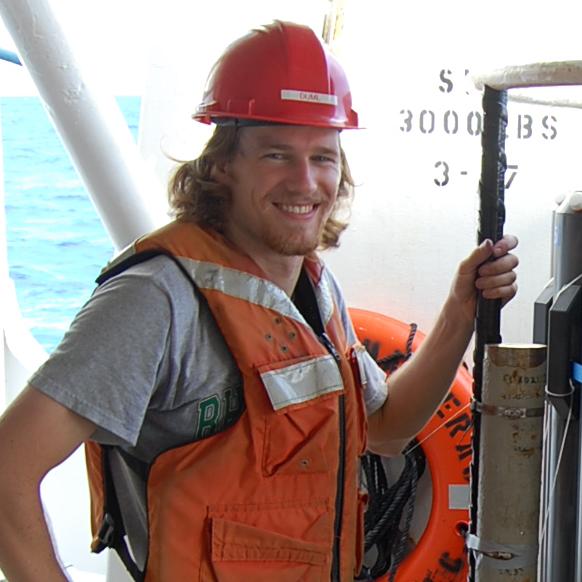
Duke Graduate Student David Honig is on a ship just off the ice shelf right now with a team that is exploring those questions.

All sorts of critters have lived in the lightless environment below the shelf for millennia, if not eons, making their living on energy sources other than sunlight, namely methane that seeps from the ocean floor. But the Larsen shelf is breaking apart and calving like crazy, exposing huge new areas of this delicate ecosystem to sunlight for the first time in a very long time.

What happens next?

Tune in to the Deep Sea News blog and follow along with David for the next two months as the team tries to find out.

Friday, July 10, 2009

Scientists Called to Action

Marine scientist Sheril Kirshenbaum, a research associate in Stuart Pimm's group at the Nicholas School of the Environment, is the co-author of a provocative new book that has just come out, "UNSCIENTIFIC AMERICA: How Scientific Illiteracy Threatens Our Future."

She argues that in an age of global warming, energy crisis, nuclear proliferation, and health pandemics, we probably need science and scientists more than ever. But American public support for the scientific enterprise is slipping, according to the latest Pew Research numbers, and the general public is more than a little hazy about what science is and what it does.

The book's prescription: Broaden the concept of science education from K-12 level through grad school to give ALL students a basic appreciation of science, ie. get into the process, not just the disembodied facts and definitions of standardized tests. And two, scientists need to get out there with the public and become ambassadors and communicators. (Music to our ears!)

Kirshenbaum and co-author Chris Mooney also blog together on this and other topics at "The Intersection."

Kirshenbaum will be preaching the gospel at a pair of upcoming book signings in the area:

Thursday, July 23 at 7:30 pm
Quail Ridge Books & Music in Raleigh
3522 Wade Avenue, near Meredith College
(919) 828-1588
(map)

Wednesday, Sept. 30, 2009 at 7:00 p.m.
The Regulator Bookshop in Durham
720 Ninth St
(919) 286-2700

Thursday, July 2, 2009

Exhausted and Refreshed


Guest Post from Maheen Shermohammed, who is a Howard Hughes Medical Institute undergraduate fellow in the neurobiology lab of Nicole Calakos:

I got back from lab today at 8PM. 8PM... and I started at 9AM. There have been very few times in my life that I have come home as exhausted as I have some of the days in these past two weeks. Now granted, I've never really had a job before. Still, this whole research thing isn't easy, and I didn't really expect it to be.

Part of me (the workaholic part) feels great coming home too tired to move and feeling like I really put in a day of hard work. But there's another part of me that keeps questioning why I'm doing this. To be honest, I don't really like pipetting and running gels in a lab all day. It's really cool to learn new techniques and try them once or twice, but they get old and tedious. I'm still not positive if research is what I want to do for the rest of my life, and there are days in lab that make me very hesitant to pursue it.

But then I talk to my P.I. She makes no effort to convince me that research can be a great career; she doesn't have to. Whenever she talks about our projects, her eyes light up. It's so refreshing. She sat with me today for a good hour helping me troubleshoot and discussing what directions we could take my project from here. As I talked to her, just barely keeping up with the conversation, I felt this sense of nerdy exhilaration that I haven't felt in a long time and that I've never been afraid to admit. It's something I can only describe as that unique feeling in your mind when it's trying to figure something out. When it's encountering something that it hasn't quite dealt with before, but has just barely enough capacity and resources to handle.

I know I have a very romantic idea of research. Like many people, it's really the concepts that interest me. How a protein folds correctly- so cool. Trying to figure out if a protein you just expressed is folded correctly- annoying. I get impatient. And not really because things don't work right. Sometimes troubleshooting is a blast. But I get impatient to move on, get one step closer to the answer, learn just a little bit more than I knew before. I want to get the stuff that people already know how to do over with (digestions, expressions, gels, etc.), I want to stop feeling like I'm just going through the motions, and I want to get to that part that makes research so appealing (and terrifying), to that part of innovation, that part of going somewhere that no one has gone before and being the first one to see where it takes you.

My P.I. knows the techniques better than anyone else. She had to learn all that stuff before she could pretty much just work with the concepts like she does now. I see it as kind of paying your dues. Research is dealing with something that's always new, which makes it very challenging. But I don't think it's that challenge I'm afraid of. I figure if I can get to the point where I need to face it, I'll be able to. It's those dues that I'm not sure I'll be able to handle. But hey, I've to try right?

Adios for now!

Wednesday, January 21, 2009

Duke Research Blogroll Grows

The practice of blogging about science -- writing short, informal little items about science news, the process of science, the interesting people doing science -- is more than a fad at this point. It's become a full-on movement.

Witness the third international gathering of science bloggers in the Triangle this past weekend, now called ScienceOnline(insert year here).

Several Duke bloggers were on hand to meet their fellow bloggers and present on panels in the "unconference," including Vanessa Woods of Bonobo Handshake and Meredith Barrett of Lemur Health & Conservation (don't miss Meredith's short videos of mouse lemurs!).

When we launched the Duke Research online magazine just over a year ago, we wanted to tap into these fresh and authentic voices through a "science blogroll." At first, it was a little scant, with only three or four that we could find. Today, there are more than a dozen!

In fact, we picked up two new members of the Duke Science blogroll at ScienceOnline09:

Kevin Zelnio (on the left, in the crab hat) is a research technician at the Duke Marine Lab who was an established blogger at Deep Sea News before he came to Beaufort. He team-writes the blog with Craig McClain, who works at the National Evolutionary Synthesis Center in Durham, and Peter Etnoyer, who earned a Nicholas School masters degree with Larry Crowder at the Marine Lab.

Southern Fried Scientist Andrew (the squid-head above) is a Duke graduate student -- also at the Marine Lab -- an an undergrad alumnus. He studies deep sea biology, and encourages his undergrad students to make short videos about what they've learned.

Apparently the lads put on quite a show at a ScienceOnline mixer, singing some bawdy sea shanties, as marine scientists are wont to do. Sorry I missed it!

If you're reading this, you already know about science blogs, and I hope you'll add these new voices to your rounds. Please also tell your friends!

Monday, October 20, 2008

Genome Boy in NYT

Duke assistant professor Misha Angrist, aka the blogger Genome Boy, does a star turn in the New York Times today. (That's him surrendering a chunk of flesh for science, at left)

It's a story about the personal genome project, in which Angrist has been a willing participant. His genome and lots of other salient details about him will be published today for everyone to read.

What will his genome say about him ... and about us?

Angrist and nine other pioneering participants in the project are surrendering some of their privacy to get the ball rolling on what PGP leaders hope will be the complete analysis of more than 100,000 individuals. (You can sign up too.)

Only then, when we've seen the commonalities and the differences and subjected them to statistical analysis, will we truly begin to approach predictive, personalized medicine. Or maybe not. We won't know until we've tried it. Thanks for stepping up, Misha.

Friday, September 19, 2008

Cue the Action News Music!


We're under new management.

Today, we're announcing three new faces on the Duke Research blog who will add more content and more voices. We hope to do a better job of capturing the personalities and events in Duke's constantly-humming research community that wouldn't otherwise rise to the level of a press release or Duke Research story.

Monte Basgall, is Duke's senior science writer in the news office. A former newspaper reporter, he gravitates toward the physical sciences, math, statistics and the like. He's been at Duke more than 15 years and knows the research and the researchers like the back of his hand.

On the other end of the spectrum, we have two newcomers: Becca Bayham is a freshman from St. Louis who is leaning toward an environmental sciences major, and like most Duke freshmen had a very healthy diet of all sciences in high school. Vansh Muttreja is also a freshman, from New Delhi, India, who's thinking about math and economics and pressure cookers and alarm clocks...

I'm Karl Bates, the research editor in the news office, who's been struggling to make this blog worth reading. We think this blog is going to be a great new channel for sharing the Duke experience with you and hope you'll add us to your favorite reader or feed and stay in touch!

Wednesday, July 9, 2008

Learn by Doing


Every summer for the last 20 years or so, Duke's life science researchers have hosted a couple dozen super-talented rising sophomores in their labs for eight weeks of hands-on experience in the laboratory -- their first taste of it, in many cases.

The program is sponsored by the Howard Hughes Medical Institute and directed by Mary Nijhout, a biologist who heads Duke's very successful Undergraduate Research Support Office.

Last summer, we tried a little experiment on the HHMI summer fellows -- we asked them to keep blogs about their experience. What tumbled out was a fascinating look at the world of science through fresh eyes, with all the triumphs and disappointments, boredom and elation laid bare.

So this year, they're at it again, and the results, once again, are just terrific.

For example, Stephanie Haeyun Chang has learned a little about how labs share biological specimens freely and cooperatively across the country and even around the world -- but you have to check what you get carefully to make sure it's what the paper said it was!

Kristina Warren has compiled a short list of lab dos and don'ts. Like, DON'T leave precious enzymes out in a tub of ice overnight -- by morning they're junk in a water bath. DO keep track of the names and concentrations used in your recipe, and so on. She doesn't elaborate on how exactly she's accumulated all this practical wisdom, but you get a sense it won't happen again.

And Nathan Ranney, pictured mugging above, is getting some fresh air (read oppressive heat and humidity, ticks and mosquito bites) taking gas samples in the Duke Forest for his PI Rob Jackson. He's learned that a balky machine can cost you a whole day of work.

Monday, June 16, 2008

Lemur Health & Conservation


I'd like you to meet Meredith Barrett. She's a grad student in Duke's program in ecology with Lemur Center Director Anne Yoder and she's doing some very interesting work on the health of animals that are on the fringes of human encroachment.

You won't be able to meet Meredith in person -- at least not until September -- because she's on the other side of the world right now, doing field work in Madagascar. Her work involves gently trapping and darting lemurs on the forest edge and quickly taking several measures of their health status, including a physical and dental exam, a snip of hair, and yes, fecal material. (They're apparently quite willing to donate that last bit, she says.) Her hypothesis is that animal populations probably suffer from human encroachment even before the humans have actually taken away their habitat. Proving this may help inform policy about how and where to create sanctuaries.

Meredith will be taking us along on her field work and living conditions in this strange and wonderful island through a blog: Lemur Health and Conservation. Connectivity is sure to be a frustration, but as you might have noticed, Meredith is pretty game for tough conditions. She might even be able to post some video. Stay tuned!

Thursday, February 28, 2008

Faculty Bloggers: Hello?

Where are the faculty bloggers?

That’s a question we’ve been asking around Duke -- and it turns out others are wondering the same thing.

A recent posting in the blog Evolgen cast a broad net, asking for readers to rat out faculty in their own fields who have set up camp in the blogosphere. This blog covers evolutionary genetics, and it cited seven faculty (limited to principle investigators of an active research lab) who blog about their research.

But, the blog added, there must be more in this and other fields, right? Right?

One commenter suggested the apparent paucity of faculty bloggers may be greatest among the higher-ups, as there seem to be more bloggers among postdocs and grad students. In fact, at Duke we’ve ferreted out a number of such bloggers, along with blogging undergraduates, as noted in the DukeResearch blogroll.

Might it be, as another commenter suggests, that “a research professional is better off spending the time on his or her investigations, not at the keyboard writing new posts”?

Not so, responds Jonathan Eisen (photo), a professor at the University of California, Davis, Genome Center:

I have found that blogging is one of the best ways to communicate my research. I get more people finding out about what my lab does and what I am interested in from my blog than from papers, or from presentations at conferences. In addition, research results can be communicated to the public and in my opinion should be.

Even with a baby onboard, Eisen is now expanding his blogging as the new academic editor at the open access journal Public Library of Science.

So, we’re still looking for Duke faculty bloggers to highlight. And with summer coming up, when scads of faculty take to the field, blogging opportunities should blossom.

Hint, hint.

Saturday, January 19, 2008

Swarming With Bloggers

Bloggers to the left of me, bloggers to the right. Tap. Tap. Tap. Click. Click. Click.

At the 2008 North Carolina Science Blogging Conference, the explosion of science blogging is immediately manifest. Despite an official winter storm alert -- Oh, no, it’s supposed to snow! Rush out and buy toilet paper! -- some 200 science bloggers and fellow travelers gathered Jan. 19 at the research society Sigma Xi in Research Triangle Park, N.C., to discuss their meat and potatoes (or, in N.C. parlance, barbecue and hush puppies).

After grabbing coffee and rolls, along with a bag of science-and-blogging goodies provided by conference sponsors, we’re breaking into groups to get insiders’ views on an array of topics. Among the early items on the cornucopian agenda: blogging ethics. Do bloggers discussing published scientific papers have an obligation to send people to the journal articles? Can a discussion be based on an institution’s news release on the paper? Is there a need for a “code of ethics” for science bloggers? How about a list of “best practices”?

Other sessions will cover such issues as overcoming obstacles to open science in the developing world, building interactivity into blogs, student blogging from K to Ph.D., dealing with public scientific data, and various practical issues and experiences in blogging about a number of specific areas of science.

As a new blogger coming to this world from too many years in print communications, my mind boggles at the level of enthusiasm and degrees of skills collectively represented here. My hope is to bring away some lessons -- learning by osmosis, if nothing else -- that will help flavor future postings.