Thursday, July 17, 2008

Sifting the Shifting Sands


Remember all the hullabaloo when the Human Genome was first completed in 2000? It wasn't the first genome by any stretch, and it certainly won't be the last. Science marches on!

Today, there are more than a thousand completed genomes on record -- from the classic models, nematode C. elegans, fruitfly D. melanogaster and mouse M. musculus -- plus a rogue's gallery of human pathogens, the sea urchin, rice and corn, a bunch of our fellow primates and on and on and on. New ones tumble in every week. It doesn't even make news anymore!

Virtually all of this data is publicly available to any researcher who needs to make a comparison, but we're talking about billions and billions and even a couple of trillions of bits of data.

There's a lot of great science waiting to happen in all this data because time and again researchers find recurring motifs in the genes of wildly divergent species, and in those motifs, clues about what genetic features matter most and what have been changed by evolution. But Where to begin? What tools to use? What does it all mean?!

Duke's Simon Gregory, an assistant professor in medical genetics, is one of the folks who added the mouse genome to the collection, and he also knows a few things about how to sift through this huge sandpile of data to find meaning.

So for the fifth year running, he and a few colleagues are putting on a workshop to help scientists tap into this immeasurably rich source of knowledge. The conference is a three-day geek-out they call the Duke Bioinformatics Workshop, or DBW, and it runs August 18-20.

Participants who think they can hang with it, and might benefit are encouraged to attend. Details here.

Wednesday, July 9, 2008

Learn by Doing


Every summer for the last 20 years or so, Duke's life science researchers have hosted a couple dozen super-talented rising sophomores in their labs for eight weeks of hands-on experience in the laboratory -- their first taste of it, in many cases.

The program is sponsored by the Howard Hughes Medical Institute and directed by Mary Nijhout, a biologist who heads Duke's very successful Undergraduate Research Support Office.

Last summer, we tried a little experiment on the HHMI summer fellows -- we asked them to keep blogs about their experience. What tumbled out was a fascinating look at the world of science through fresh eyes, with all the triumphs and disappointments, boredom and elation laid bare.

So this year, they're at it again, and the results, once again, are just terrific.

For example, Stephanie Haeyun Chang has learned a little about how labs share biological specimens freely and cooperatively across the country and even around the world -- but you have to check what you get carefully to make sure it's what the paper said it was!

Kristina Warren has compiled a short list of lab dos and don'ts. Like, DON'T leave precious enzymes out in a tub of ice overnight -- by morning they're junk in a water bath. DO keep track of the names and concentrations used in your recipe, and so on. She doesn't elaborate on how exactly she's accumulated all this practical wisdom, but you get a sense it won't happen again.

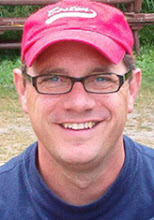
And Nathan Ranney, pictured mugging above, is getting some fresh air (read oppressive heat and humidity, ticks and mosquito bites) taking gas samples in the Duke Forest for his PI Rob Jackson. He's learned that a balky machine can cost you a whole day of work.

Thursday, June 19, 2008

Gallons Per Mile makes more sense


Now that gas is over $4 and people with one-hour commutes are pouring more into their tanks than they are into their mortgages, a lot of Americans are looking again at the cars out in the garage and wondering if there's a better way...

Should we trade mom's Corolla for a Smart Car, or reluctantly pry our hands off the helm of the mighty 10 mpg Excursion and get a dumpy old station wagon?

If you're only looking at the federally mandated Miles per Gallon sticker, it's going to be hard to make the right choice, argue Fuqua School of Business management professors Richard Larrick and Jack Soll. In a series of simple experiments, they showed that people made much more accurate choices about cars if the efficiency was expressed as gallons per 100 miles, rather than mpg.

But don't just take their word for it -- try the interactive quiz!

These guys are on to something. Watch for them all over the airwaves in the coming week.


Wednesday, June 18, 2008

Distracting Miss Daisy


British born Duke psychologist John Staddon has an essay in the July/August Atlantic Monthly which makes the argument that the American love for traffic signs of all shapes, colors and sizes is ineffective at best and downright counterproductive in many cases. Ditto for many speed limits.

Staddon, the James B Duke Professor of Psychological and Brain Sciences and professor of Biology and Neurobiology, is not merely an anarchist. He has made his career out of studying adaptive behavior -- how animals and humans change what they've been doing in response to a new stimulus. So, between that and learning to drive on the wrong side -- and in North Carolina no less -- he's got some bona fides on the topic. "Collectively, the forests of signs along American roadways, and the multitude of rules to look out for, are quite deadly," he says.

What, Staddon asks reasonably, is the point of all these ridiculous signs that aren't even in the roadway, where the driver's eyes really should be focused? He writes:

Consider the stop sign. It seems innocuous enough; we do need to stop from time to time. But think about how the signs are actually set up and used. For one thing, there’s the placement of the signs—off to the side of the road, often amid trees, parked cars, and other road signs; rarely right in front of the driver, where he or she should be looking.

Then there’s the sheer number of them. They sit at almost every intersection in most American neighborhoods. In some, every intersection seems to have a four-way stop. Stop signs are costly to drivers and bad for the environment: stop/start driving uses more gas, and vehicles pollute most when starting up from rest. More to the point, however, the overabundance of stop signs teaches drivers to be less observant of cross traffic and to exercise less judgment when driving—instead, they look for signs and drive according to what the signs tell them to do.

American drivers have become so reliant on being told what to do at every curve and intersection that they seem to lose the ability to make their own decisions, he argues.

At the very least, he says, let's consider more roundabouts instead of four-way stops, and markings in the pavement, not on a stick off to the side.

It's fascinating, provocative stuff. ...Does the Secretary of Transportation need to be American by birth?!

SEE ALSO - July 8, 2008 - Signs blamed for highway crash http://www.nytimes.com/aponline/washington/AP-Bus-Wreck-NTSB.html