A top-flight research hospital like Duke has the ability to pour tremendous resources and technology into saving the lives of newborn children who might otherwise have died within days, weeks, or months.
And it often does.
How does a family torn between hope, grief, guilt and despair sort out all the probabilities and technicalities? Do faith and hope make a difference? How do they live with the choices they've had to make?
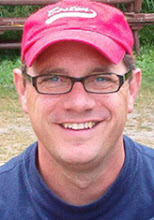
Duke nursing professors Sharron Docherty (pictured here) and Debbie Brandon are trying to understand this complex, enormously stressful situation by doing a long-term study that they hope will help other parents and health care providers make these wrenching decisions in the future.
 Funded by a 5-year, $2 million grant from the Institute of Nursing Research in the NIH, their study will enroll as many as 40 families with newborns who are extremely pre-term (before 26 weeks), have serious heart abnormalities, or genetic conditions requiring a stem cell transplant. Health care workers will be part of the data too, since they're part of the decision-making.
Probably 40 percent of these children won't make it to their first birthday, Docherty said. The survivors will likely face continued illness.
Doctoral candidate Kimberly Allen, RN describes one study case of a child who had cardiac arrest at 9 days of age, surgery on day 10, an abdominal surgery for another condition at 28 days, and again at 30 days, whereupon the baby died.
"How do you decide to go back in (for additional surgery)?" Allen asks. When -- and how -- do you make the excruciating decision to simply keep the baby comfortable and let it pass? "We tend, at a hospital like Duke, to do everything we can," Docherty said. Even though it may be a lost cause.
Families and caregivers are interviewed and given questionnaires at regular intervals for a year in an attempt to measure their thoughts, fears, hopes, and feelings throughout the roller coaster ride. The data are more qualitative and subjective than a statistician might like, but "this is the only way to do it," Docherty said at a recent research open house in the School of Nursing. "We've looked at decision-making for decades and haven't really got at this. We've been able to see a tree, but not the whole forest."
The team is working on ways to visualize their complicated findings with the Renaissance Computing Institute (RENCI). Read the abstract of their pilot study. (PDF file)


 Another idea is designing polymers that be threaded though tiny bodily passages and then shift their shapes at internal body temperatures.