Monday, June 16, 2008

Lemur Health & Conservation


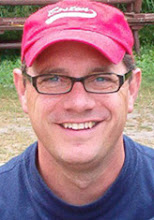
I'd like you to meet Meredith Barrett. She's a grad student in Duke's program in ecology with Lemur Center Director Anne Yoder and she's doing some very interesting work on the health of animals that are on the fringes of human encroachment.

You won't be able to meet Meredith in person -- at least not until September -- because she's on the other side of the world right now, doing field work in Madagascar. Her work involves gently trapping and darting lemurs on the forest edge and quickly taking several measures of their health status, including a physical and dental exam, a snip of hair, and yes, fecal material. (They're apparently quite willing to donate that last bit, she says.) Her hypothesis is that animal populations probably suffer from human encroachment even before the humans have actually taken away their habitat. Proving this may help inform policy about how and where to create sanctuaries.

Meredith will be taking us along on her field work and living conditions in this strange and wonderful island through a blog: Lemur Health and Conservation. Connectivity is sure to be a frustration, but as you might have noticed, Meredith is pretty game for tough conditions. She might even be able to post some video. Stay tuned!

Tuesday, June 10, 2008

Chemo and Radiation Sometimes Make Tumor Stronger


Many of us who have watched a loved one suffer through cancer treatments sort of suspected this might be true: some solid tumor cells that avoid being killed by radiation or chemo actually become tougher and better able to survive the next round of treatment.

Unfortunately, it's a lot like what Friedrich Nietzsche said: whatever doesn't kill me makes me stronger.

A Duke team led by Mark Dewhirst in radiation oncology has figured out how and why this happens: The solid tumor cells' innate ability to signal surrounding tissues to give them more oxygen gets turned up a notch by the treatment assault. Next time around, they're that much better able to resist.

Dewhirst and colleagues are now working on ways to turn off this gimme-oxygen signal in conjunction with chemo and radiation to really root the @#$%@s out. They've also made a movie showing the constant flux of oxygen in tumors, rising and falling like the tides. It's something that's only recently been identified.

Wednesday, June 4, 2008

Dancing Differently to the Same Drummer

Speaking of MEMS... okay, we weren't, but we should be. Micro electro-mechanical systems, MEMS, represent an exciting frontier that melds computer chips, robotics, and other great stuff, like plumbing and electrical.

Bruce Donald, a Duke professor of biochemistry and computer science, has developed some mind-blowing MEMS robots that move around in very precise patterns without any wires attached. A group of four of them, in fact, can be made to do different dance moves in response to a single set of incoming signals. In this case, a high-frequency electronic pulse. Their stage? Smaller than the head of a pin.

A swarm of these things might be used to carry biological samples around in a tiny environment, for example, or build something.

They remind me of those buzzing "electronic" football and hockey games baby-boomers had as kids, where the little players would careen around the rink randomly as the thing buzzed madly beneath their plastic feet. Only, unlike that stupid game, these players go right where they should!

One to watch, for sure.

Friday, May 30, 2008

Evarium gives your Facebook page cooties


Duke evolutionary biologist Ralph Haygood, a post-doc in Greg Wray's lab, is one of those folks who does biology with software. So, it's a natural evolution, I suppose you could say, that in his spare time, Ralph has also written a nifty little virtual life application for Facebook called Evarium.

Evarium runs in a box on your profile page any time you're on Facebook. You pick out a few of these colorful little pinwheels, squares and diatom-looking things and set them loose to whirl around in white space looking for their ideal mate. Finding a reasonable match, they pair up and spin in synchrony for a moment or two. As they part, they leave behind a tiny speck of a new organism, representing some mix of their traits. It soon grows to mature size and begins the hunt for its own ideal mate. Like any self-respecting experimentalist, you've got a big freezer where you can put these new critters in suspended animation, or even send them to your friends at other institutions!

While most Evarium users so far are evo-biology geeks, Ralph is really hoping the app catches on with some of the millions of school-age kids on Facebook. "It's best described as an educational toy, mostly fun but potentially instructive too," Ralph says. "I hope Evarium will help persuade some of them that evolution isn't necessarily personified by Charles Darwin with a somber gaze and a long white beard."