Friday, February 29, 2008

Robots!

As Daniela Rus sees it, the future is chockablock with robots.

Personal robots to handle household chores and remind us to take our medicine -- increasingly important needs, given the aging world. Industrial robots that perform dangerous or tedious jobs we’d rather avoid. Robot cars that drive themselves.

How about a robot system to keep cows where they belong? Or systems that produce “programmable matter” in a fashion that sounds like generating something from nothing?

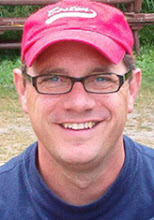
All on or over the horizon, says Rus (photo), a personable robotmaker who doubles as co-director of the Computer Science and Artificial Intelligence Laboratory’s Center for Robotics, based at the Massachusetts Institute of Technology, among other posts.

She toured the robotic future on Feb. 28 at Duke as the latest speaker in the Provost’s Lecture Series, which this year examines “On Being Human.” Look here for a robot who's who.

Her talk fit right in, as a number of Duke researchers are exploring ways to advance robotics and expand human-machine interfaces. For example, neuroscientist Dr. Miguel Nicolelis recently reported research in which a monkey used its brain to control the real-time walking of a robot half way around the world (see video here). And biomechanical engineers led by Stephen Smith have shown that a 3-D ultrasound scanner they developed can successfully guide a surgical robot.

In her lab, Rus and assorted students are developing a robotic system for underwater observation (photo). The’ve tested AMOUR -- Autonomous Modular Optical Underwater Robot -- in various locations, including French Polynesia (shown in a video accompanied by the singing crab in The Little Mermaid.)

They also are developing a flying gizmo for observing hard-to-reach spots, demonstrated in video of the tiny craft buzzing about the Vatican.

So the book on robots is hot. But for now, Rus says, robots expressing emotions remains on the science-fiction shelf.

Thursday, February 28, 2008

Faculty Bloggers: Hello?

Where are the faculty bloggers?

That’s a question we’ve been asking around Duke -- and it turns out others are wondering the same thing.

A recent posting in the blog Evolgen cast a broad net, asking for readers to rat out faculty in their own fields who have set up camp in the blogosphere. This blog covers evolutionary genetics, and it cited seven faculty (limited to principle investigators of an active research lab) who blog about their research.

But, the blog added, there must be more in this and other fields, right? Right?

One commenter suggested the apparent paucity of faculty bloggers may be greatest among the higher-ups, as there seem to be more bloggers among postdocs and grad students. In fact, at Duke we’ve ferreted out a number of such bloggers, along with blogging undergraduates, as noted in the DukeResearch blogroll.

Might it be, as another commenter suggests, that “a research professional is better off spending the time on his or her investigations, not at the keyboard writing new posts”?

Not so, responds Jonathan Eisen (photo), a professor at the University of California, Davis, Genome Center:

I have found that blogging is one of the best ways to communicate my research. I get more people finding out about what my lab does and what I am interested in from my blog than from papers, or from presentations at conferences. In addition, research results can be communicated to the public and in my opinion should be.

Even with a baby onboard, Eisen is now expanding his blogging as the new academic editor at the open access journal Public Library of Science.

So, we’re still looking for Duke faculty bloggers to highlight. And with summer coming up, when scads of faculty take to the field, blogging opportunities should blossom.

Hint, hint.

Friday, February 22, 2008

Look and Listen

You've seen them: those trick-the-eye images of geometric objects that look different in size or that have different angles -- obviously! -- but in fact are the same. In this classic image, for example, the objects have approximately the same 90 degree angles.

Now you can peek behind the curtain as Duke Medical Center neuroscientist Dale Purves (photo) shows how you are fooled. On a website straight out of Oz, he and his laboratory mates reveal -- in compelling sight and sound -- how humans see and hear what they do. Go there -- it's a five-ticket ride.

Critics agree. The site recently was voted Best of the Web by the editors of The Scientist, in the magazine's first-ever review of laboratory websites. The judges singled out the site's "excellent interactive graphics" and its "engaging way of presenting difficult concepts." But as a downside, one visitor who nominated the site cautioned: "Be prepared to lose at least a half hour!"

As to the science behind the scenes, Dr. Purves and his colleagues -- including Beau Lotto and Mark Williams, who designed the website and created many of its graphics -- have devised a theory that as Duke Magazine has reported:
...challenges the cherished belief that our visual brains are logically organized, analytical machines that provide a neural blueprint for interpreting images. The result of their exacting work: a theory that vision is basically a reflex no different than the knee-jerk response produced when the doctor taps your knee with a rubber hammer.

While visiting the lab's website, explore some of the mysteries of music and the harmonics of human vocalization, which Dr. Purves and his band also study. In fact, their work was recently hailed by Discover magazine as one of the top 100 science stories of 2007; see here and here. A video of Dr. Purves and student Jonathan Choi explaining one recent finding can be viewed here or below.


Wednesday, February 20, 2008

Researchers: What's Up?

Consider it duty...or enlightened self-interest.

By whatever label, scientists and engineers can better serve society and themselves by putting more effort into communicating with the public.

Learning to communicate in everyday language traditionally has not ranked high in scientific training. So by default, if not inclination, researchers typically leave this job to others -- and then often complain about the results.

But help is at hand, nationally and at Duke.

At its recent annual meeting, the American Association for the Advancement of Science launched a new website, called Communicating Science: Tools for Scientists and Engineers, to help researchers communicate more broadly with the public. Just a click away, researchers can participate in brief webinars on communications, get how-to tips for media interviews and learn about strategies for identifying public outreach opportunities.

The AAAS Center for Public Engagement with Science and Technology, together with the National Science Foundation, also is sponsoring a series of regional training workshops to provide researchers with up-close-and-personal communications help. Coming up: an April 3 workshop at North Carolina State University.

At Duke, researchers can tap into several kinds of assistance. The Office of News & Communications holds a media training seminar each year, typically in late January. Don't want to wait until next year? One-on-one training sessions can be scheduled on request.

Also, faculty who have been contacted by the media for an interview can use -- free -- several campus radio and television studios. Convenient? In less than 45 minutes, a researcher can leave the lab, do the interview and be back at work.

With science and technology playing increasingly important roles in society -- and with funding facing increasing challenges -- getting researchers talking seems a win-win situation.